
- The Midlands secured 102 Foreign Direct Investment (FDI) projects in 2025, maintaining its position as the UK’s third-largest destination for inward investment despite a 16.4% year-on-year decline
- The region announced 5,970 FDI-related jobs, ranking first for employment in the UK, outside of London
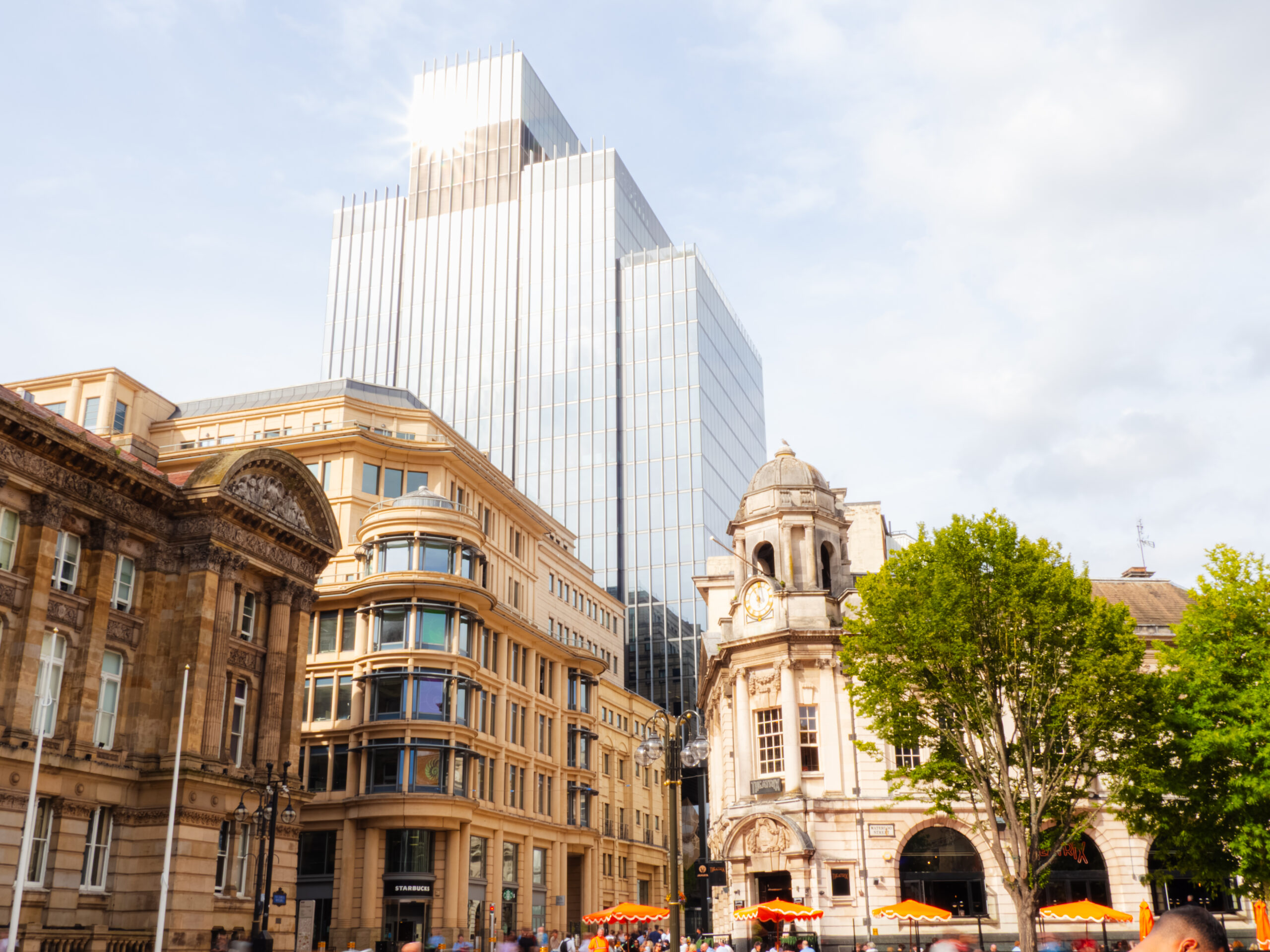
- Birmingham strengthened its position as a leading UK city for investment, attracting 26 projects in 2025 (up from 24 in 2024), making it the third most successful city outside London
- Growth in business services and software & IT helped offset weaker performance in some traditional manufacturing sectors, with tech-related employment rising across both the UK and Europe
The Midlands remained one of the UK’s most significant destinations for foreign direct investment (FDI) in 2025, retaining its position as the country’s third-largest region, while Birmingham further strengthened its standing as a leading UK city for inward investment.
According to the EY 2026 UK Attractiveness Survey, the Midlands secured 102 FDI projects in 2025, down from 122 in 2024, representing a 16% year-on-year decline. While this decrease was slightly more pronounced than the UK-wide fall of 14%, the region still accounted for 14% of all UK inward investment projects — its third-highest share in the past decade.
The Midlands also continued to play a critical role in job creation from inward investment. FDI projects in the region generated 5,970 jobs in 2025, ranking second nationally behind London. Although this figure reflects a 29% decrease from 2024, it underscores the Midlands’ continued importance as a driver of employment linked to global investment.
Despite softer overall project volumes, Birmingham delivered a strong performance, attracting 26 projects in 2025 compared with 24 the previous year. This placed the city third outside London, behind only Manchester (31 projects) and Edinburgh (30). Other Midlands locations — including Warwick, Nottingham, Derby, Leicester, Coventry and Telford — also continued to feature among the UK’s key investment destinations.
Service-led growth supports evolving investment profile
While the Midlands continues to benefit from its established manufacturing and industrial strengths, 2025 data highlights growing momentum in service-led sectors.
Business Services & Professional Services emerged as the leading sector for FDI in the Midlands, attracting 18 projects — a significant increase from five in 2024. Transportation manufacturers and suppliers ranked second with 16 projects, while Software & IT Services rose to third place with 14 projects, up from nine the previous year. Agri-food accounted for 10 projects, followed by Machinery & Equipment with eight.
Over the longer term, the Midlands’ investment profile continues to diversify. Across the past decade, Software & IT Services has become the region’s leading FDI sector with 186 projects, narrowly ahead of Transportation manufacturers & suppliers with 181 projects.
Manufacturing remains a core strength. In 2025, the Midlands secured 28 manufacturing projects and retained a leading position in logistics, accounting for 38.8% of all UK logistics-related FDI projects.
US remains the leading source of investment for the Midlands
The United States (US) continued to be the largest source of FDI into the Midlands in 2025, accounting for 14.7% of projects. Germany, India and France were the next most significant contributors, each delivering 10 projects.
Australia and the Netherlands also ranked among the region’s key investor markets, with France, Australia and the Netherlands all recording year-on-year increases in project numbers.
Performance reflects wider pressures on investment landscape
The decline in Midlands FDI reflects broader challenges across the UK and Europe. European FDI project numbers fell by 6.6% in 2025, while the UK recorded a sharper 14.4% decline, with 730 projects secured nationally — the lowest level in a decade.
Against this backdrop, the Midlands’ continued strength in both project numbers and employment highlights its resilience and enduring appeal to international investors.
Across the UK, only Greater London (up 5%), Northern Ireland (up 65%) and Wales (up 56%) recorded growth in FDI projects in 2025. The South West remained flat, while all other regions experienced declines.
At a European level, France ranked first in 2024 with 852 projects, despite a 17% year-on-year drop. Overall, Europe saw a 7% decline in FDI as global economic uncertainty — including tariff-related disruption, subdued growth, elevated energy costs and increased competition from markets such as Asia and the United States — continued to weigh on investment activity.
Paul Brown, Partner, Government and Public Sector at EY in the Midlands, said: “The Midlands remains a cornerstone of the UK’s foreign direct investment landscape. While project numbers softened in 2025, the region’s ability to retain its position as the UK’s third-largest destination and second for FDI-related employment highlights the strength and resilience of its investment proposition.
“It is particularly encouraging to see Birmingham continue to build momentum as one of the UK’s leading cities for investment, alongside clear growth in sectors such as business services and technology. This reflects a broadening of the region’s appeal beyond its traditional industrial base.
“Looking ahead, the Midlands is well positioned to capitalise on any improvement in investor confidence. The priority now is to convert strong fundamentals — including its skilled workforce, manufacturing heritage and growing innovation capabilities — into sustained growth in project volumes, particularly in higher-value and future-focused sectors.”
Neil Rami, chief executive at the West Midlands Growth Company, said: “Against a backdrop of declining investment across both the UK and Europe, the Midlands has demonstrated its resilience as one of the country’s most competitive destinations for inward investment. Although project volumes have softened in line with wider market conditions, the region ranks as the UK’s leading location for FDI-led employment outside London. With more than one in five UK FDI jobs secured here, the Midlands is punching well above its weight in driving national growth.
“Our unmatched scale, connected innovation ecosystem and deep talent pool make the region a compelling proposition for international investors. However, in an increasingly competitive global market, investment does not simply follow economic fundamentals. Sustaining growth will require continued targeted intervention, strong international partnerships and a clear, market-led proposition that aligns investor demand with local opportunities. That is how we will secure the next generation of investment, jobs and productivity gains for the West Midlands, wider Midlands, and indeed the UK.”
Majority of UK regions recorded saw FDI fall in 2025
EY analysis reveals that 2025 was a challenging year for inward investment for much of the country.
Significant year‑on‑year declines were recorded in the West Midlands (‑21%), North West (‑41%), South East (‑32%), East Midlands (‑6%), Yorkshire and the Humber (‑46%), North East (‑48%) and the East of England (‑41%). Project numbers were flat in the South West, while London (5%), Wales (56%) and Northern Ireland (65%) recorded increases.
FDI projects fell across the North of England regions, declining collectively by 44% to 101 projects in 2025, down from 180 in 2024. The North West remained the fourth‑best performing UK region with 51 projects, despite a 41% decline, while Yorkshire and the Humber ranked eighth with 28 projects and the North East placed 11th with 22 projects.
Greater London accounted for 38% of all UK FDI projects in 2025, up from 31% the previous year.
Manchester remained the UK’s most successful city for FDI outside of London, despite seeing overall projects fall from 44 to 31 year-on-year. Manchester has been the UK’s second best-performing city for FDI in four of the past six years.
Edinburgh (30 projects), Birmingham (26 projects) and Glasgow (23 projects) made up the remainder of the UK’s top five cities for securing FDI projects. Both Edinburgh (25%) and Birmingham (8%) saw year-on-year increases in projects, while Glasgow (-15%) saw a decline.
More than half (55%) of global investors surveyed said they intend to invest in the UK over the next year. Of that group, 51% intend to invest in London, followed by Scotland (33%), the South West (20%), the West Midlands (19%), Wales (16%) and the North West (15%).
London (51%), Edinburgh (27%) and Birmingham (18%) emerged as the most popular UK cities among investors planning to establish or expand operations over the next year.
![studio[1]](https://colmorelife.co.uk/wp-content/uploads/2026/07/studio1.jpg)